Full-Stack BIM Professional Course
for Civil Engineers in Nagpur
Transition from site execution to high-paying, global BIM design roles with an industry-accredited training program.
- 7 Months
- 230+ Learning Hours
- 2+ Portfolio Projects
- 112+ Hiring Partners
Get Started with Your AEC Learning Journey
By continuing you agree to our Terms & Privacy Policy
Powered by
RSP India

RSP India
Accredited
by Autodesk
by Autodesk
100% Placement
Assistance
Assistance
RIBA & ISO
19650 Aligned
19650 Aligned
Why BIM Matters?
The Skill Gap Between What You Know and What Firms Need Is BIM
What Learners Ask First
What the BIM Shift Actually Means for Civil Engineers
Firms across the AEC industry are hiring civil & structural engineers with relevant BIM skills. Those who are getting trained today are landing the best roles first.
India's BIM Skills Gap: A USD 15.42 Billion Opportunity
The global BIM market is projected to grow from USD 9.03 billion in 2025 to USD 15.42 billion by 2030, with an 11.3% CAGR. Asia Pacific is expected to see the fastest growth during this period.
As construction and infrastructure projects across India become more digital and complex, BIM is becoming a bigger part of how these projects are planned and delivered.
At the same time, a shortage of trained BIM professionals remains one of the biggest constraints holding the industry back. For civil engineers, that gap creates a real opportunity: a skill that is becoming essential in a market where few professionals have it yet.
Essential BIM Skills for Civil Engineers in Nagpur
Firms want to deliver projects faster and avoid costly errors during construction. BIM helps them do that by bringing architectural, structural, and MEP information into one connected model. Teams can spot conflicts before construction begins, when they are still easier and cheaper to fix. But making this workflow work requires people who know how to manage it, and skilled BIM professionals remain in short supply. For civil engineers in Nagpur, that shortage is making BIM less of a preferred skill and more of a hiring requirement.
Here is what that skill set actually includes.
Software Proficiency and Structural Coordination
Civil 3D, ETABS, and Navisworks form the foundation of how civil engineers build and coordinate models across disciplines. Civil engineers use these tools to catch conflicts between structural, architectural, and MEP elements before construction starts, when they are still easier to fix.
CDE and LOD Standards
Civil engineers work inside a Common Data Environment. They follow international BIM standards like ISO 19650 to manage and share project data with every discipline. LOD standards then guide how much detail a model needs at each project stage. This keeps the model accurate without over-detailing too early.
4D and 5D BIM
4D BIM connects models to project schedules. 5D BIM connects them to cost and quantity data. Civil engineers working across both take part in scheduling, budgeting, and quantity takeoff decisions on a project.
BIM Roles and Career Opportunities for Civil Engineers in Nagpur
Most civil engineers begin their BIM career as a Modeler, earning between ₹3-5 LPA, since this role builds directly on skills they already have from structural school. From there, the path moves to BIM Designer or BIM Coordinator roles in the ₹4-7 LPA range, where civil engineers begin working across disciplines and managing coordination between structural and MEP teams.
With a few years of experience, civil engineers can move into a BIM Specialist role, earning ₹5-8 LPA, or advance further into BIM Manager positions, which pay ₹10-18 LPA and involve leading BIM strategy and coordination across an entire project.
Salary Growth For Civil Engineers After Full-Stack BIM Professional Certification
After completing a BIM certification, professionals typically see salary growth of around 30-40% moving from a traditional construction role into a BIM-focused one. The table below breaks down how this plays out across specific roles.
| Job Profile | Salary Range | Experience Level |
|---|---|---|
| BIM Consultant | ₹10L – ₹25L+ | Mid–Senior (6–12+ yrs) |
| 3D Modeler | ₹2.5L – ₹5L | Entry (0–2 yrs) |
| BIM Manager | ₹15L – ₹25L+ | Senior (10+ yrs) |
| BIM Coordinator | ₹7L – ₹14L | Mid (3–7 yrs) |
| Clash Detection Specialist | ₹5L – ₹10L | Entry–Mid (2–6 yrs) |
| Infrastructure BIM Specialist | ₹7L – ₹15L | Mid–Senior (4–10 yrs) |
| BIM Trainer | ₹4L – ₹10L | Entry–Mid (2–8 yrs) |
| BIM Engineer | ₹3L – ₹12L | Entry–Mid (0–6 yrs) |
| Digital Twin Specialist | ₹10L – ₹25L+ | Mid–Senior (5–12 yrs) |
Your Path to a BIM Career in Nagpur
For civil engineers in Nagpur looking to start learning BIM, the opportunity is clear. The first step is to build a strong understanding of the software and workflows used in the industry. Tools such as Revit, Civil 3D, Navisworks, along with frameworks such as ISO 19650 and 4D and 5D BIM, are becoming important parts of the BIM skill set.
Most civil engineers already develop strong design skills through their education and practice. What they often lack is structured exposure to coordination, execution planning, and how BIM is applied on a live project. BuildAmbit's Full-Stack BIM Professional Course for Civil Engineers in Nagpur is developed with RSP Design India. It takes this a step further by giving civil engineers a structured, project-based exposure to the workflows they need to work confidently in BIM.

What You'll Learn
The BIM Learning Path for Civil Engineers in Nagpur
Kick-Off Session for Civil and Construction Engineering
BIM Fundamentals AlignmentSoftware & Workflow SetupUnderstanding Civil & Structural Project Environments
 BIM Fundamentals Alignment
 Software & Workflow Setup
 Understanding Civil & Structural Project Environments
Deliver an RSP-Executed Portfolio Project
 Residential
Columbia Aaltius Tower
Bangalore, India

- Managing repetition vs variation
- Efficient structural layouts
- BIM-driven decisions
ISO-19650LOD 300-400RIBACode & Compliance
 Commercial
Lulu IT Park
Kochi, India
- Complex grid & structural alignment
- Coordination-heavy zones
- Site access for high footfall
ISO-19650LOD 300-400RIBACode & Compliance
Software & Tools
Learn 21+ Software, Tools and Plugins










8+ More Software, Tools and Plugins

What You'll Earn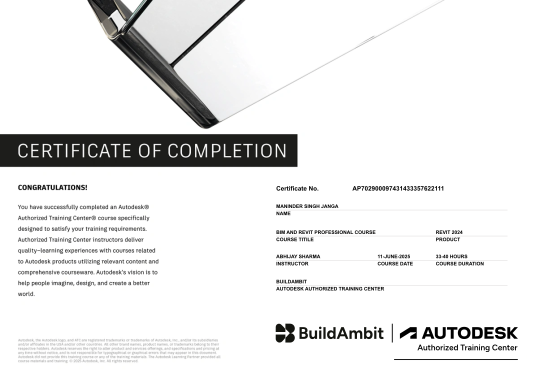
Credentials That Open Doors to Global AEC Careers
Dual CertificationIndustry-LedGlobal Recognition
Autodesk Certification
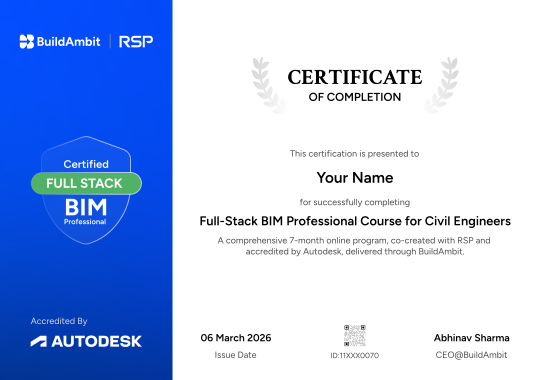
BuildAmbit | RSP Certification
Our Mentors
Learn From Those You Aspire to Work With
100% Placement Assistance
End-to-End Career Support for Civil Engineers in Nagpur
From learning to hiring, we're with you at every step.
1:1 Mentorship
Personal guidance from industry mentors for your career growth
Portfolio Development
Build a portfolio that gets you shortlisted for your dream job
Resume & LinkedIn Optimisation
Build a strong profile that recruiters notice and prefer
Mock Interviews
Personal guidance from industry mentors for your career growth


Access to 112+ AEC firms actively hiring
BIM Course for Civil Engineers in Nagpur
Frequently Asked Questions
Building Information Modelling (BIM) is a collaborative digital workflow used to plan, design, coordinate, and deliver infrastructure and civil engineering projects. It enables engineers to create intelligent models, improve coordination across disciplines, reduce errors, and streamline project delivery. As BIM adoption grows across infrastructure projects, it has become a valuable skill for civil engineers looking to build successful careers.
From Site Engineer to BIM Professional in 7 Months
Limited seats ensure close, 1:1 mentorship from working AEC professionals.